
Water coming through a ceiling or light fixture
Live water near electrical is a fire and shock risk. Kill the breaker to that room and call.
Call (314) 429-6000 right now — a real person answers 24 hours a day, 7 days a week, 365 days a year. We dispatch emergency crews across the St. Louis metro for active leaks, fallen trees, and shingles stripped off by wind, and we tarp from the peak of the roof down to divert water away from your attic and living space until a permanent repair is scheduled. Emergency response times vary with weather and call volume; you get a realistic window on the phone.
Not a call center script and not voicemail. They take your address, what you are seeing, and whether water is actively coming into the house.
Active interior water beats cosmetic damage in the queue. You get a realistic arrival window based on real conditions — we will not invent a time to get you off the phone.
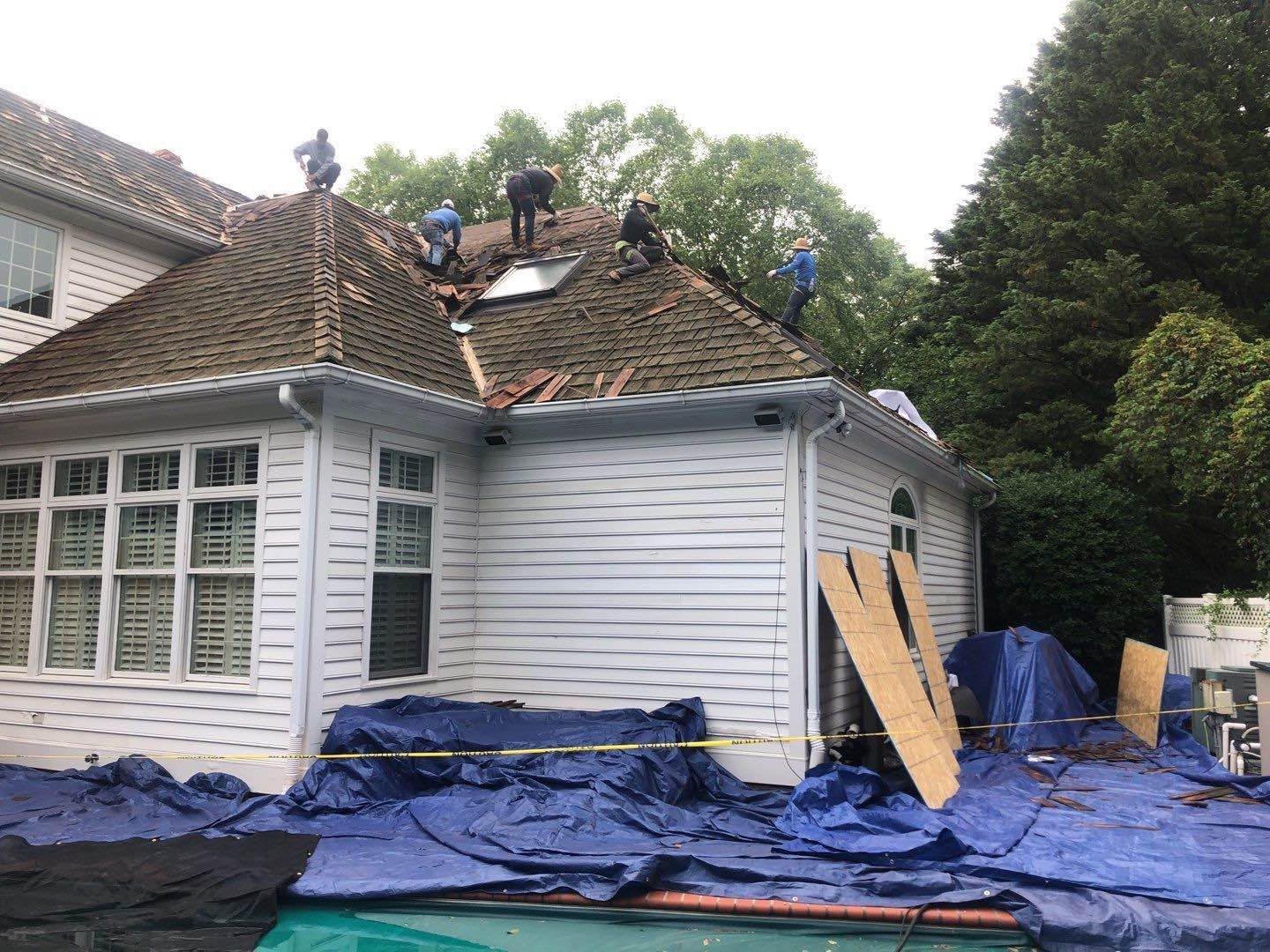
Emergency tarping from the peak down, debris made safe, and the failure documented with photographs for your insurance file.
Once you are dry, we scope the real repair or replacement — and if it is a claim, our insurance team takes the adjuster meeting.
Live water near electrical is a fire and shock risk. Kill the breaker to that room and call.
Do not climb up to look. The decking may be compromised and the load can shift. We handle it from a safe approach.
Bare underlayment or bare decking has hours of water resistance, not days. This is a tarp-tonight situation.
That is pooled water above the drywall. Stay out of the room, move what you can from the doorway, and call.
Bruised shingles that look intact today shed granules and fail within a season. Get it documented while the storm date is fresh.
Standing water on a membrane roof adds enormous structural load and finds every seam. Our commercial crews respond after hours too.
Yes. A live person answers (314) 429-6000 at any hour, including holidays and during the worst of a storm. That is the single reason this line exists. Plenty of roofing companies advertise emergency service and route after-hours calls to voicemail - ours rings a dispatcher who takes your address and gets you in the queue.
Move furniture, electronics, and rugs out from under the leak and put down a bucket or a bin. If the ceiling is bulging or sagging with trapped water, stay out from under it. Shut off electricity to that room at the breaker if water is anywhere near a fixture or outlet. Photograph everything - the ceiling, the walls, the floor, and any damaged belongings - because your insurance adjuster will want to see it.
We run a heavy-duty tarp from the peak of the roof down over the damaged section and secure it, so gravity carries water off the roof edge instead of into your attic. It is a temporary weatherproofing measure, not a repair. It buys you the days you need to get an adjuster out and a permanent repair scheduled without the ceiling coming down.
Emergency service rates apply for after-hours dispatch. Weigh that against what water does unchecked: soaked insulation loses its R-value, drywall and framing start growing mold within a couple of days, and hardwood floors cup. Mitigation is almost always the cheaper side of that equation.
In most cases yes, and reasonable emergency mitigation is frequently covered. Keep every invoice and every photo. Our insurance division works your claim alongside the repair so the tarping and the permanent work land in the same scope of loss where they belong.
If water is coming in right now, call instead — the phone is always faster than a form.
Emergency roof calls we take most often, city by city.
Every hour a roof stays open costs more than the tarp does. One call and we start moving.